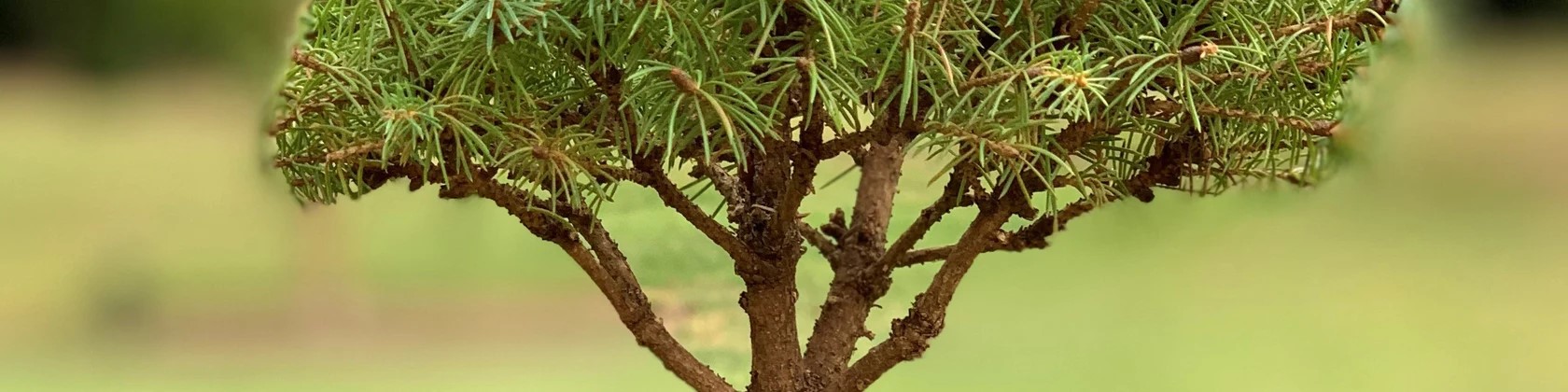
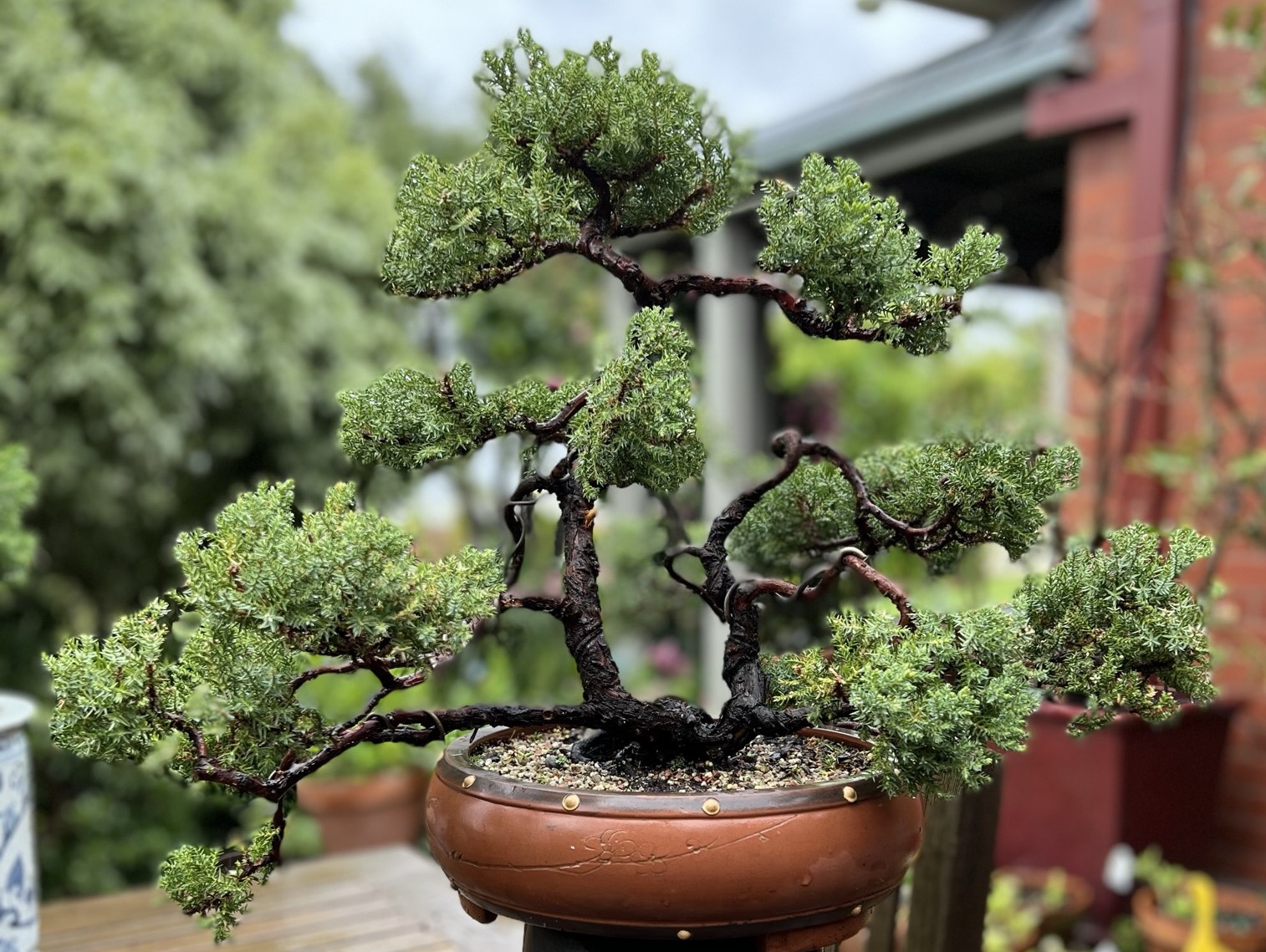
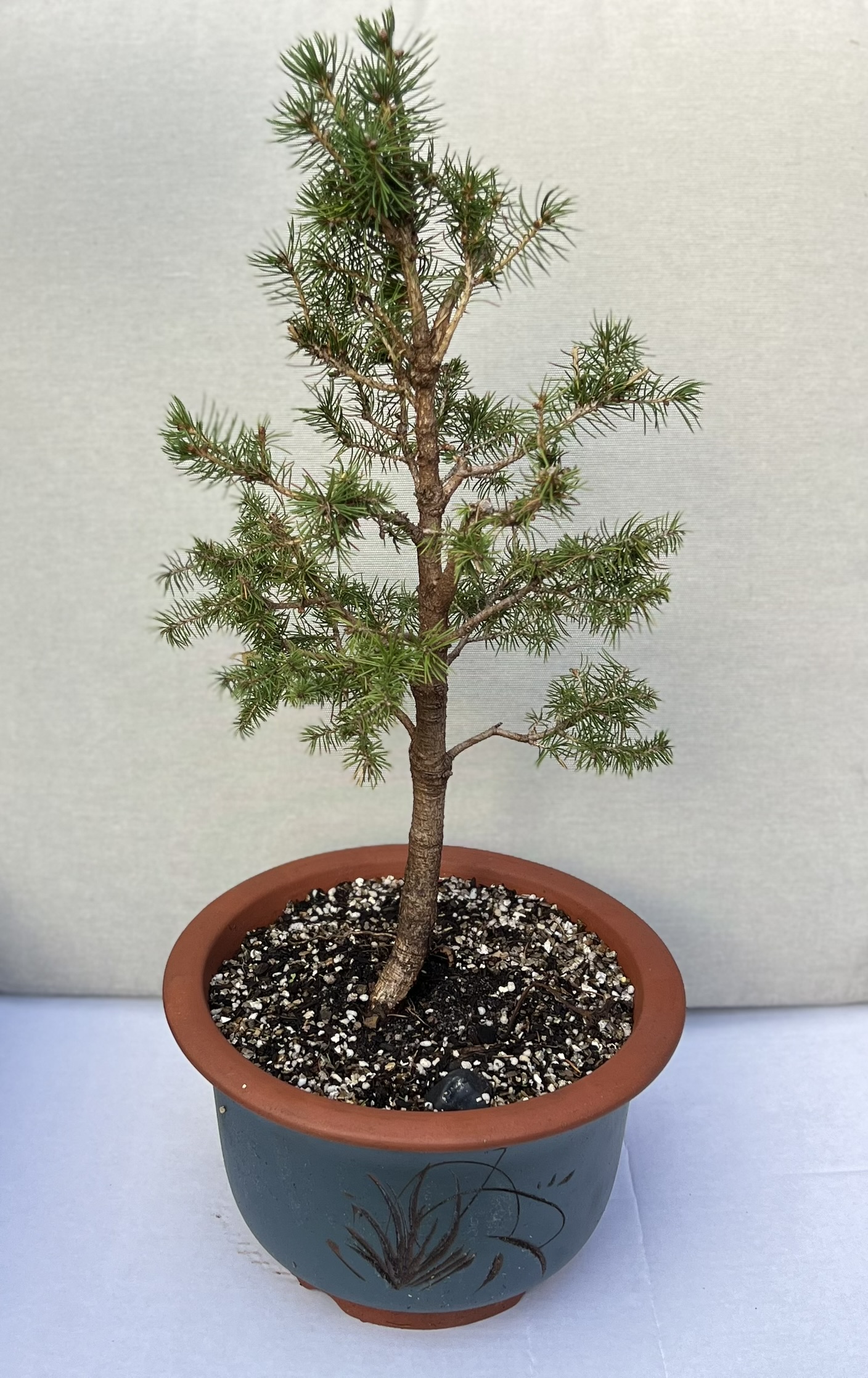
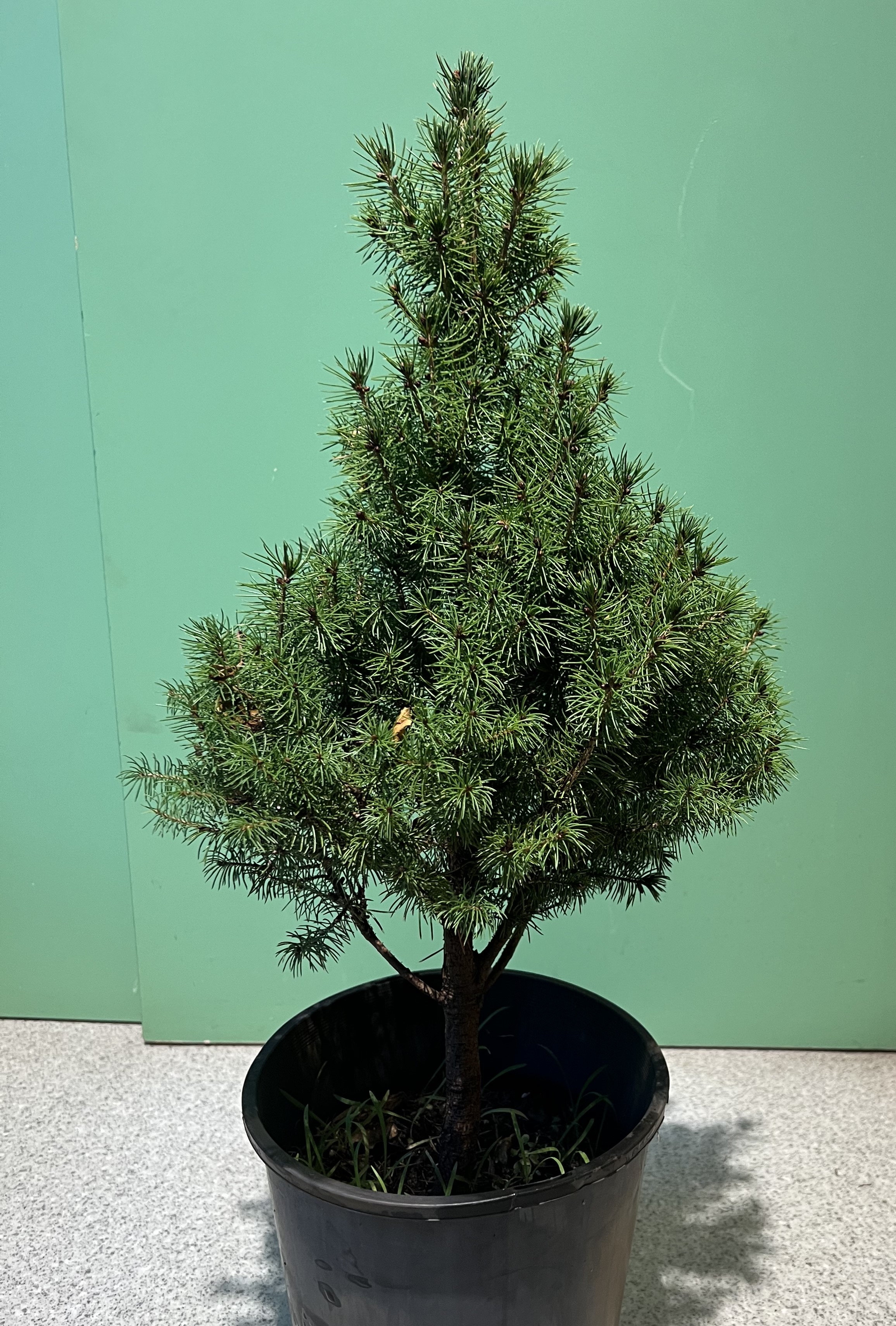
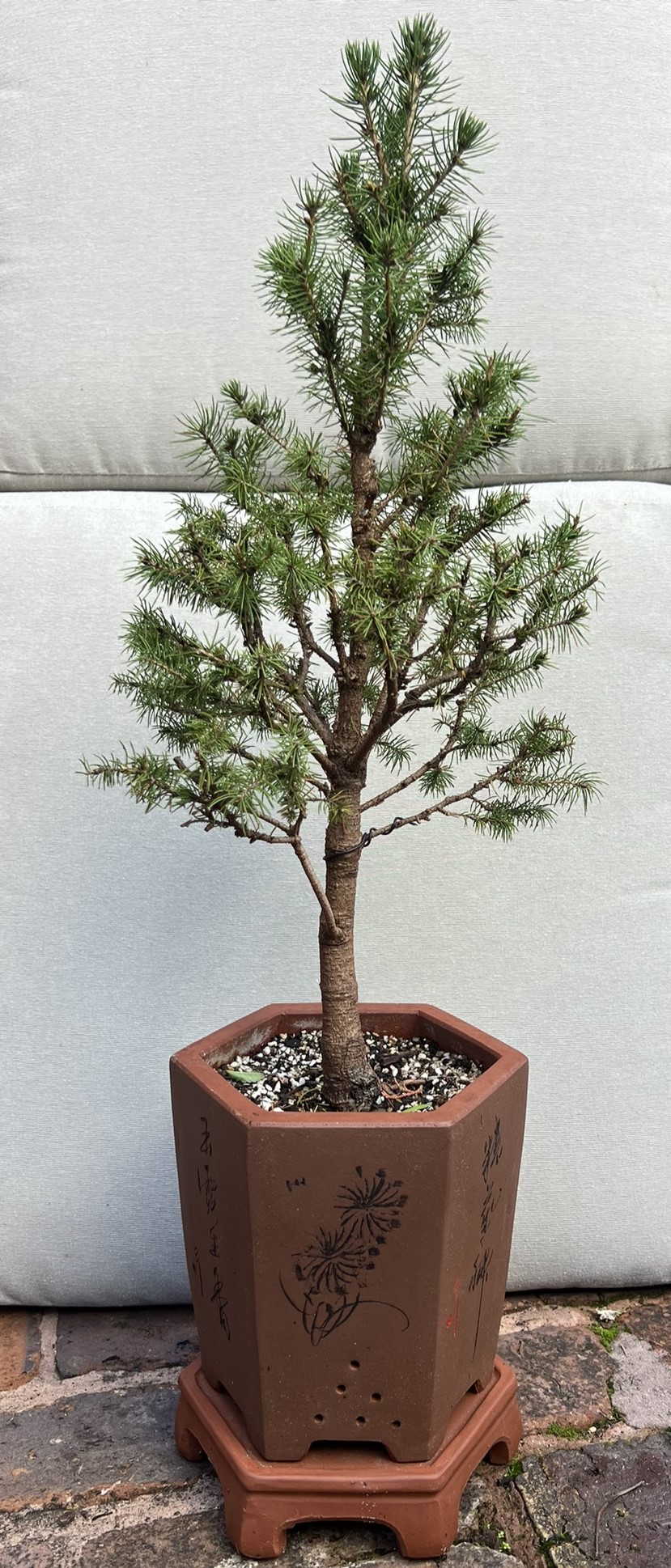
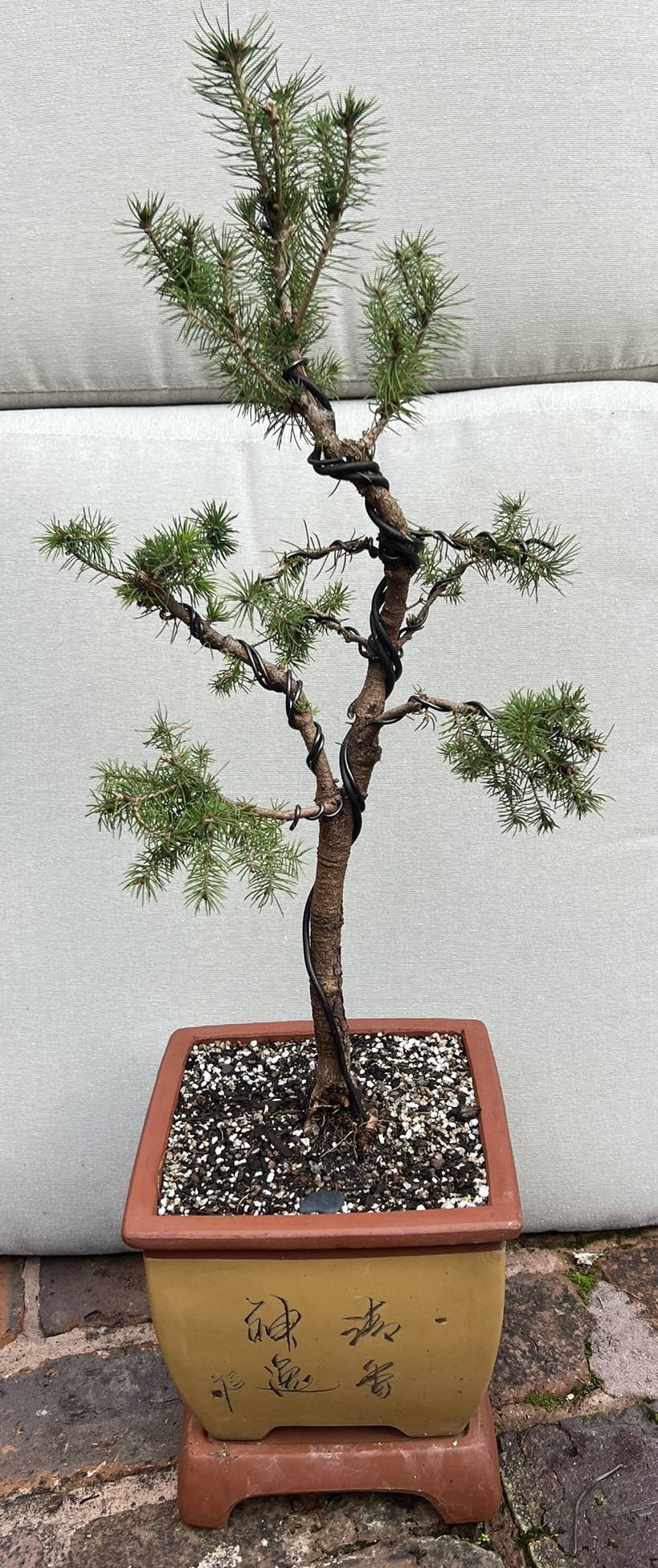
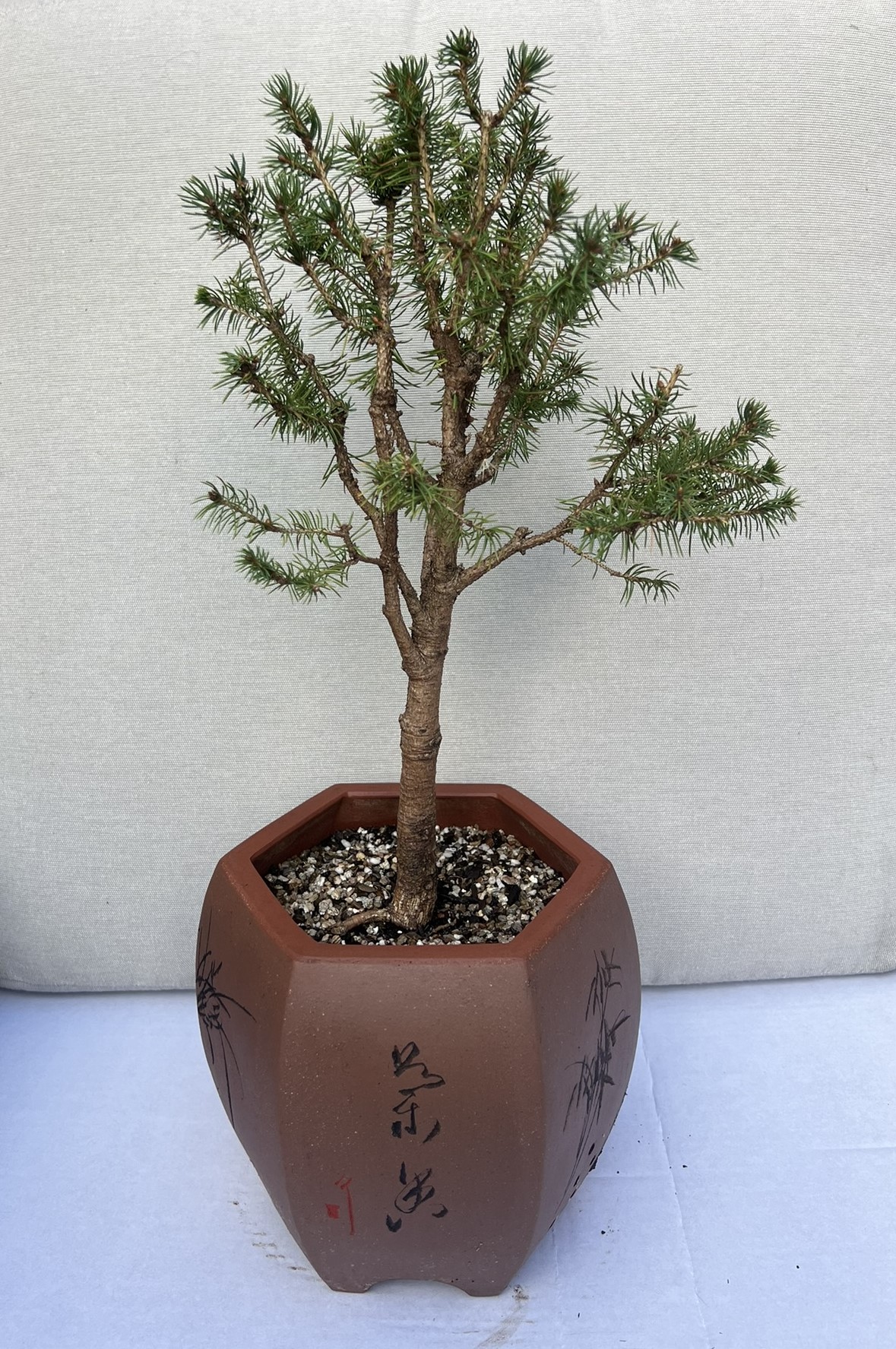
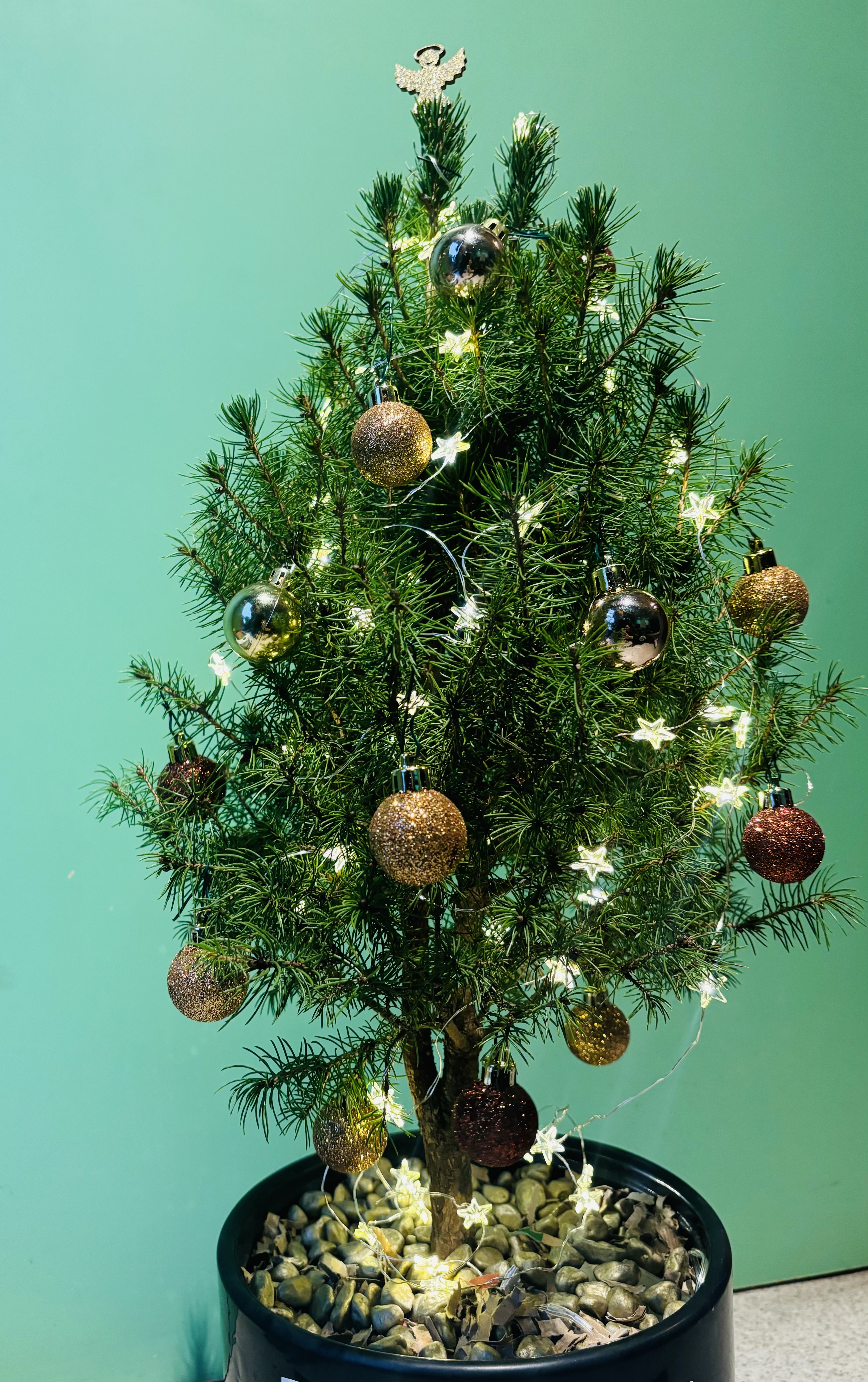
The Norway Spruce is the most popular Christmas Tree and grown in many countries around the world. It is native to Europe growing from Norway in the northwest and Poland eastward, and also in the mountains of central Europe, southwest to the western end of the Alps, and southeast in the Carpathians and Balkans to the extreme north of Greece.
As a Bonsai Tree it is popular because of its characteristic cone shape and rugged bark trunks. It is however a slow growing tree and patience is required to achieve the best results.
Pruning should be carried out sparingly over a period of time, harsh cut back can be detrimental to the tree. Maintain good branch separation and open internal space. Remove any dead wood which may rot. Keep close watch on fertilisation to assist health and branch growth.
Maintain a central leader to create the height and conical shape if pruning for classic upright bonsai styles (Chokkan or Moyogi). If pruning for a classic broom style bonsai, maintain a symetrical and conical shape(Hokidachi).
These trees have been cultivated over a number of years and are now ready to begin their life as a Bonsai. Look to maximise the individual tree structure and let the tree guide you into a style which will show off its character the best.
Bonsai pots can be selected from our range or supply your own, please message us to select the best pot and Bonsai style.
Barwon Bonsai Shop
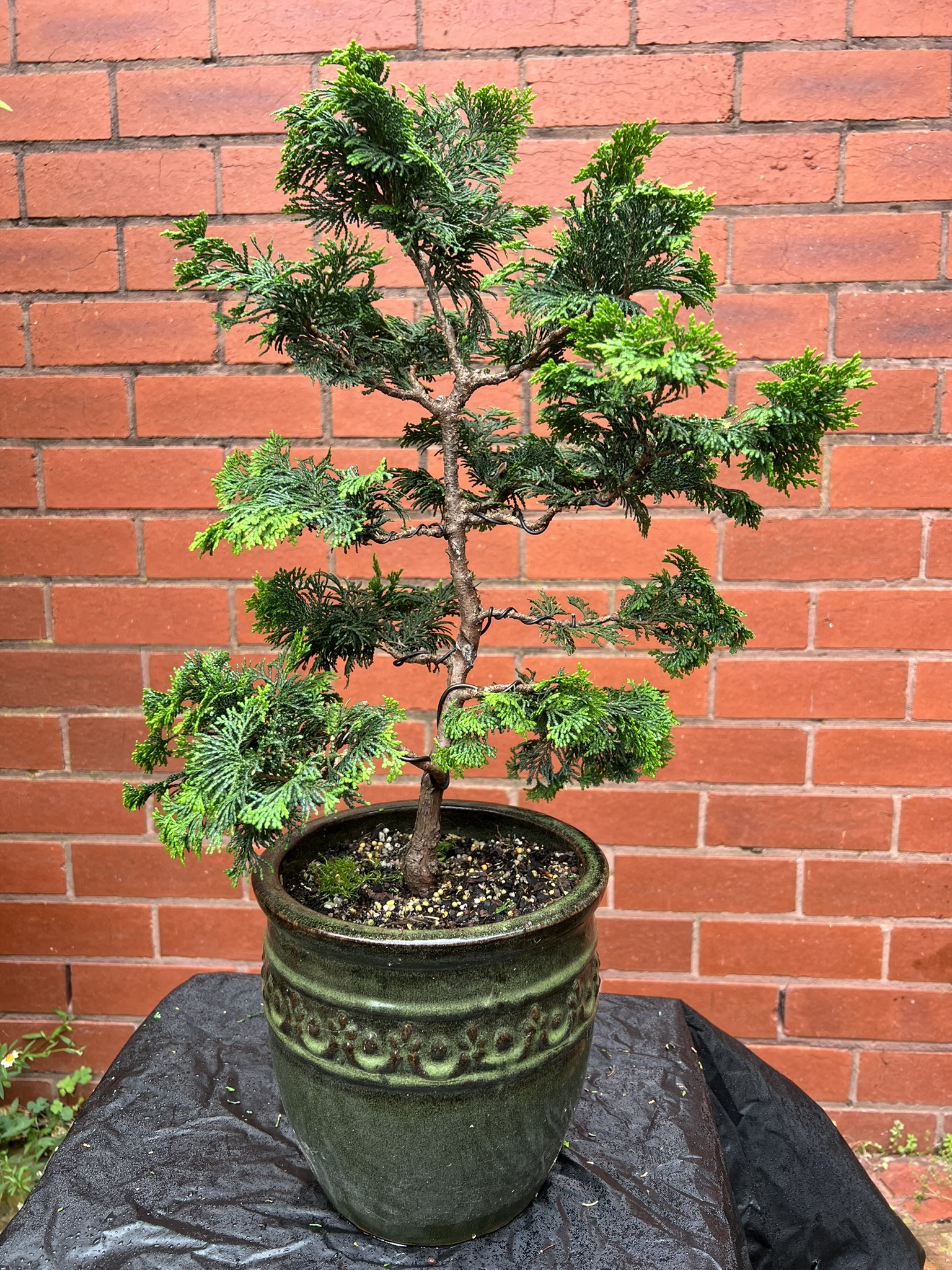
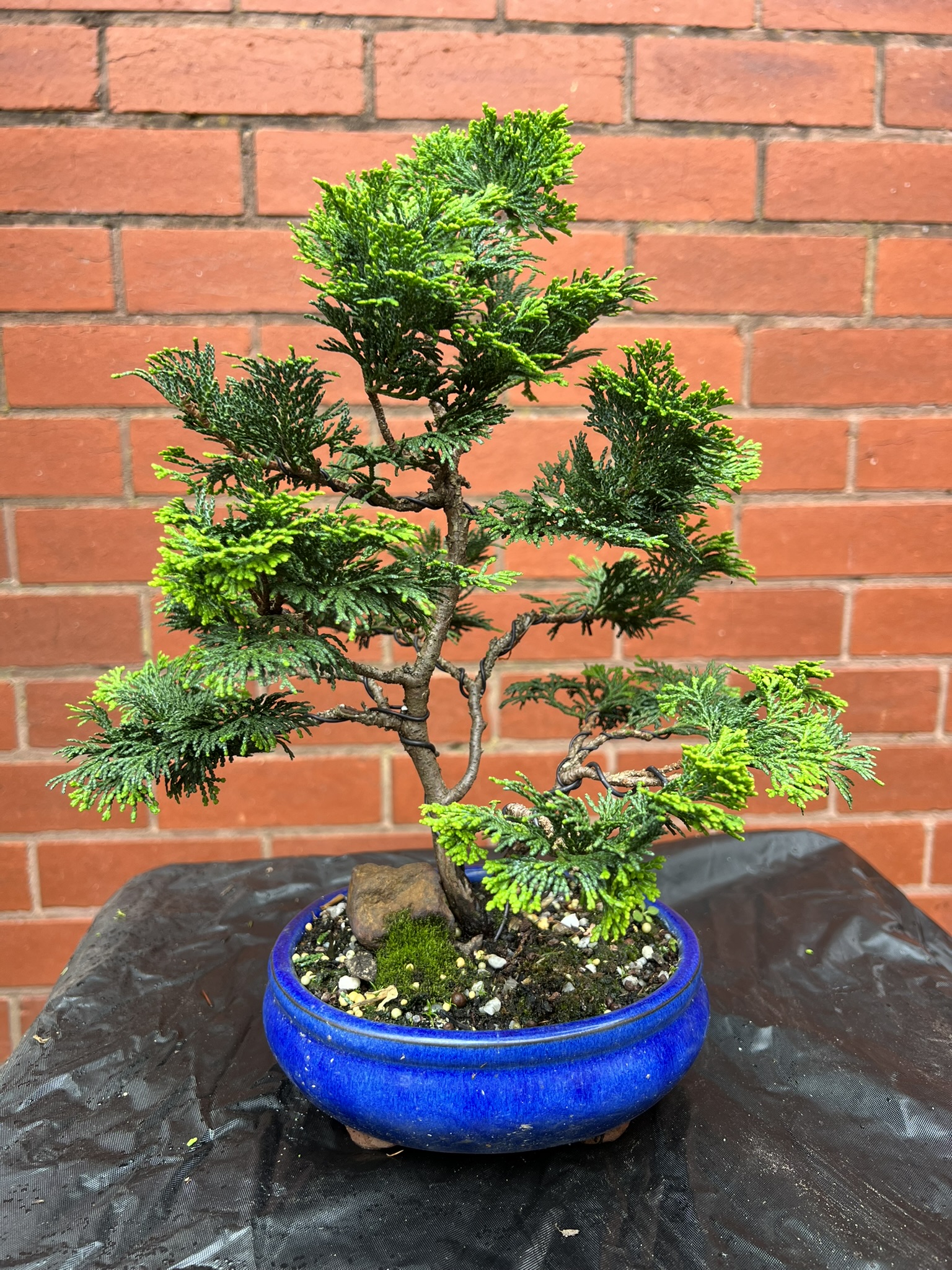
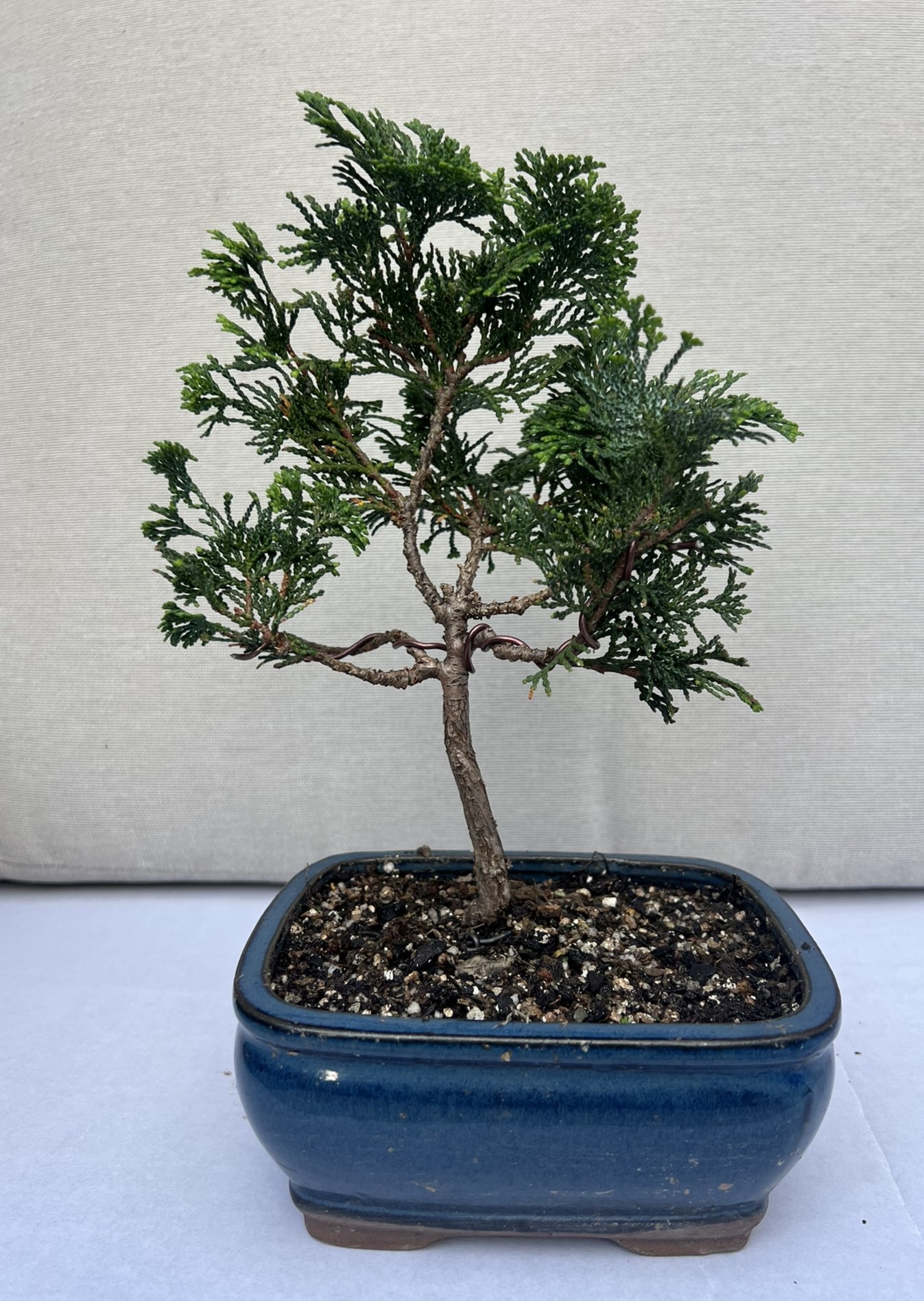
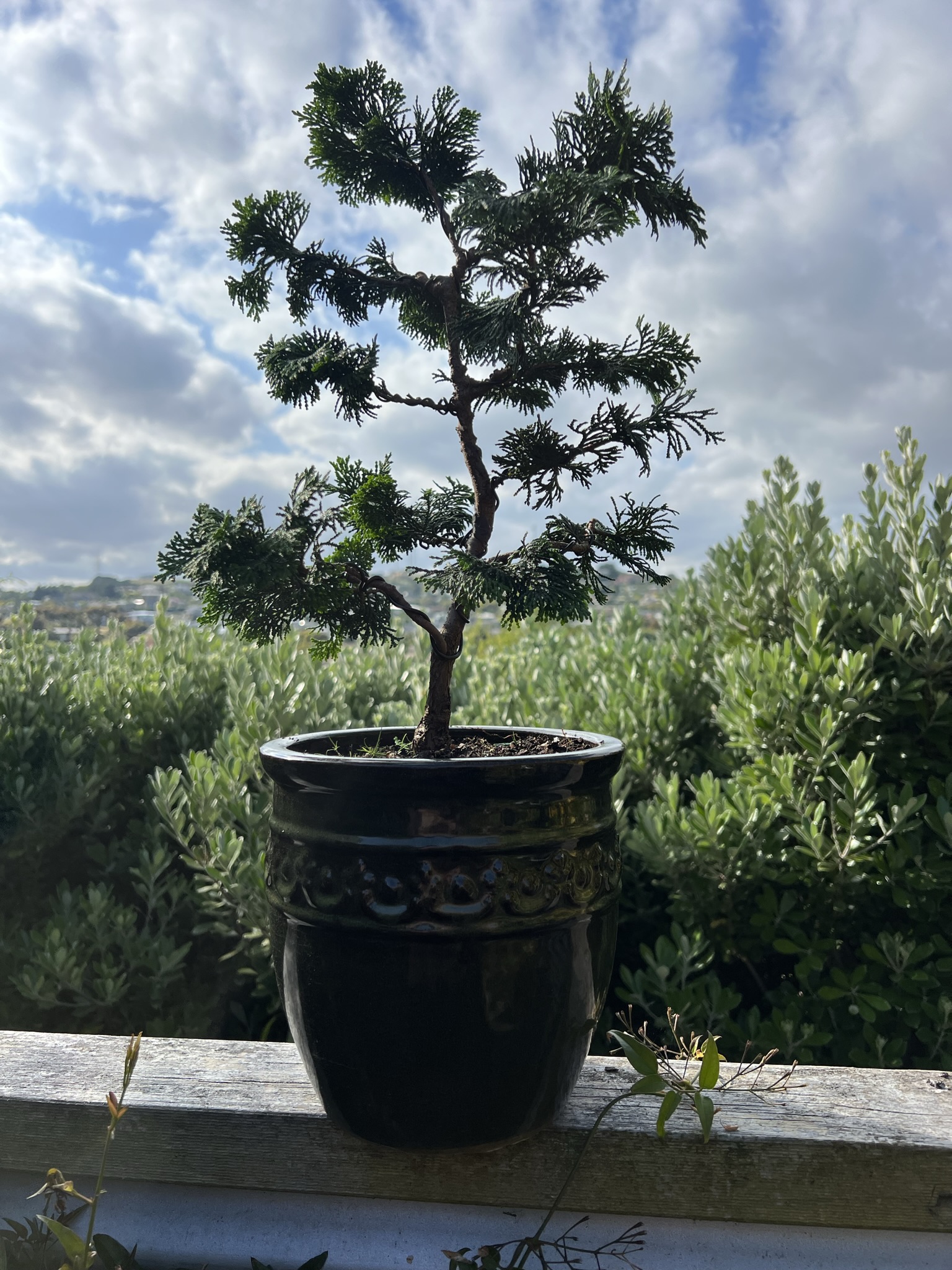
HinokiCypress is a graceful spreading tree with branches that droop at the tips. The small cones and attractive, red peeling bark add character along with its luxurious, emerald green soft needles that form dense branches around the trunk, perfect for Bonsai Trees.
Hinoki cypress is a coastal, low-elevation, elongating species. It prefers a lush, high-moisture, and high-rainfall area where it can grow to impressive heights. It is often used in much of the beautiful architecture and woodwork of traditional Japanese structures.
As a Bonsai It prefers a sunny location but sheltered from strong winds, with a well drained soil and consistent moisure. It does not tolerate dry conditions. The hinoki cypress is capable of representing a multitude of forms and shapes. It has phenomenal bark, a soft presentation, and promises to give you great enjoyment.
These trees have been cultivated over a number of years and are now ready to begin their life as a Bonsai. Look to maximise the individual tree structure and let the tree guide you into a style which will show off its character the best.
Bonsai pots can be selected from our range or supply your own, please message us to select the best pot and Bonsai style.
 p>
p>
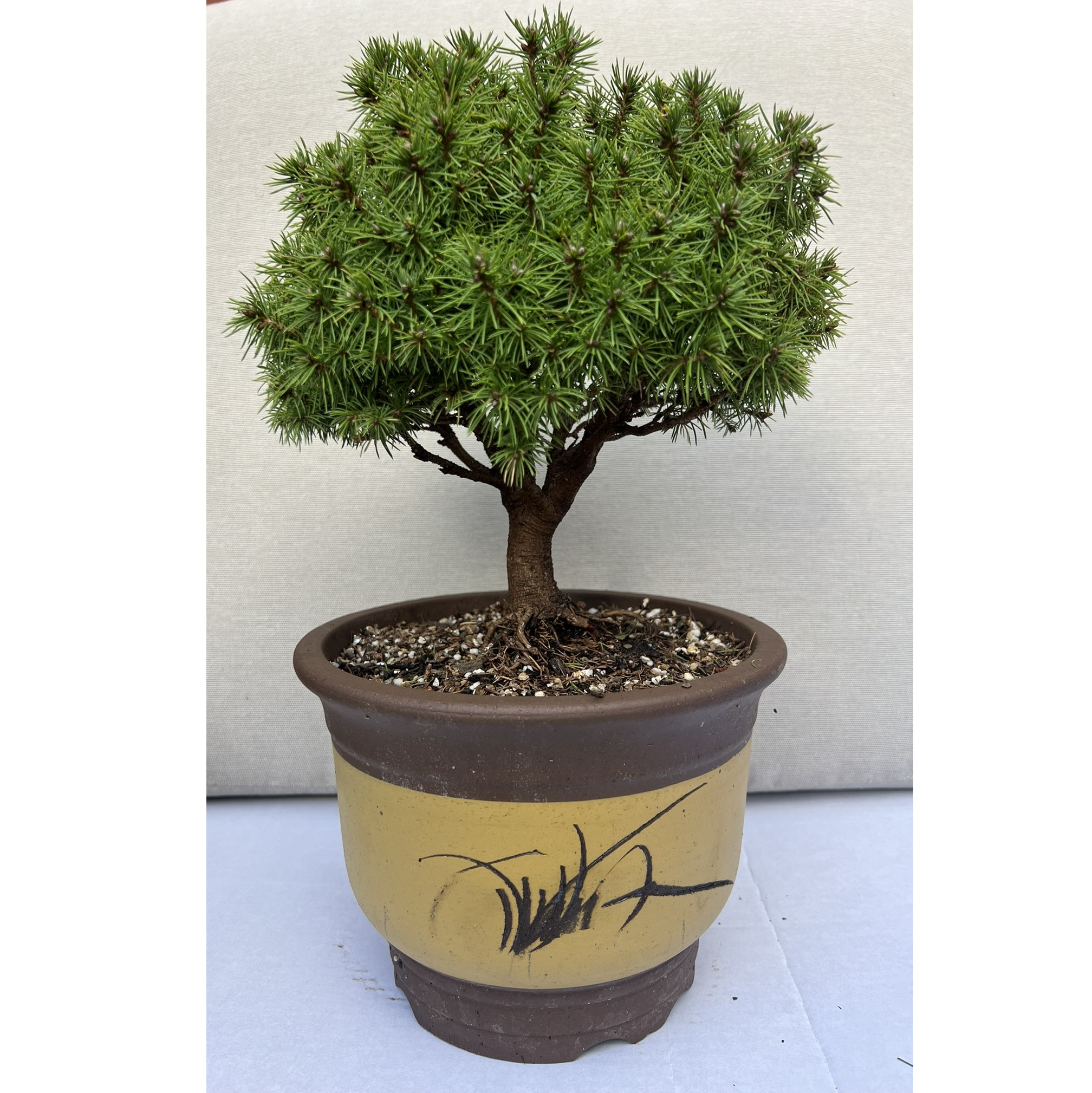
The Japanese Umbrella Pine (Sciadopitys verticillata) is an ornimental evergreen. Its Latin name originates from the Greek word skias or skiados meaning "umbel" and pitys meaning "pine". Verticillatta means "whirled". The whorl-like needles on the tree resemble the spikes of an open umbrella.
As a Bonsai Tree it is popular because of its dome shape and rugged bark trunks. It is however a slow growing tree and patience is required to achieve the best results.
Pruning should be carried out sparingly over a period of time, harsh cut back can be detrimental to the tree. Maintain good branch separation and open internal space. Keep close watch on fertilisation to assist health and branch growth. Maintain regular but light pruning for a classic broom style bonsai with a symetrical and conical shape.
These trees have been cultivated over a number of years and are now ready to begin their life as a Bonsai. Look to maximise the individual tree structure and let the tree guide you into a style which will show off its character the best.
Bonsai pots can be selected from our range or supply your own, please message us to select the best pot and Bonsai style.
Barwon Bonsai Shop
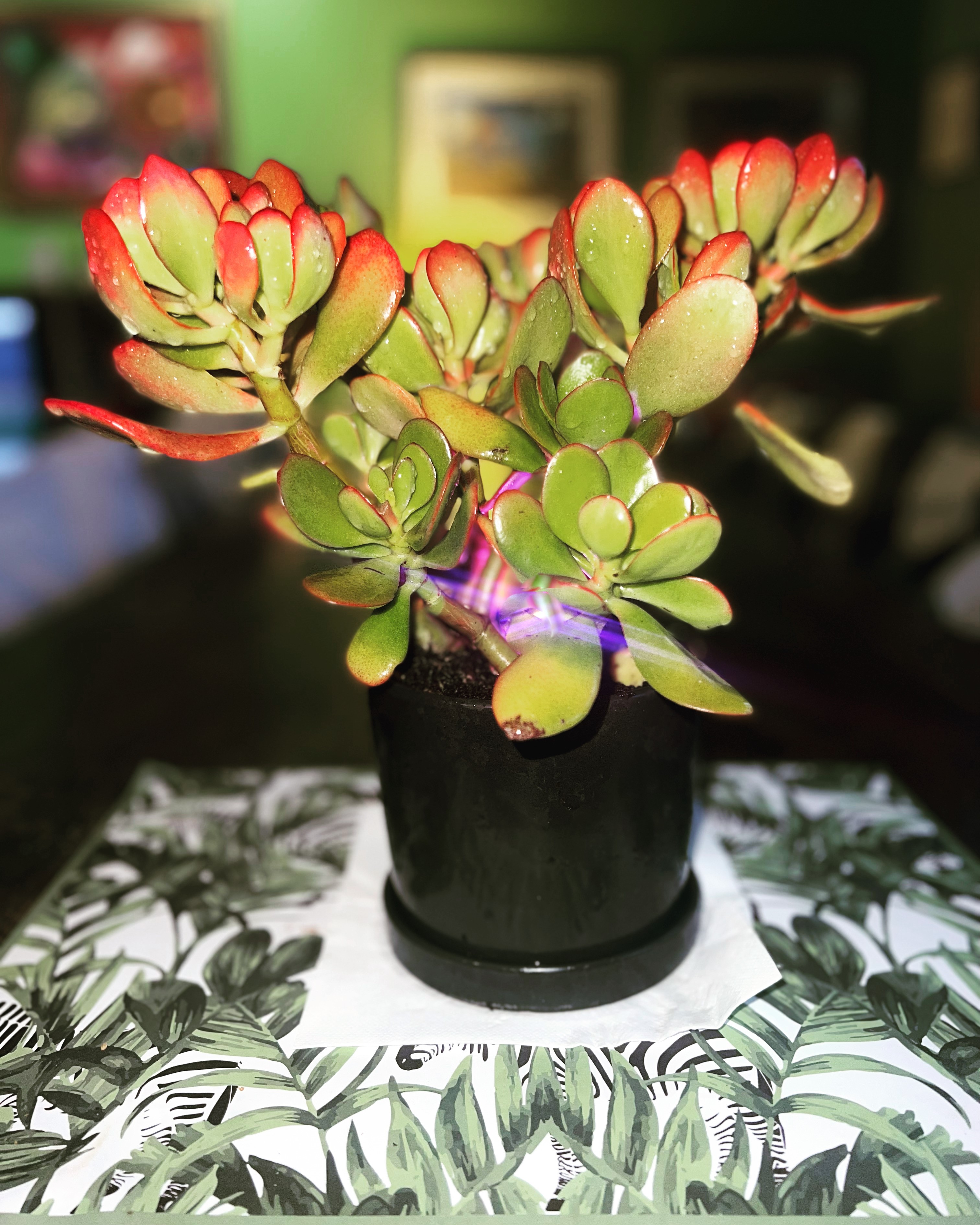
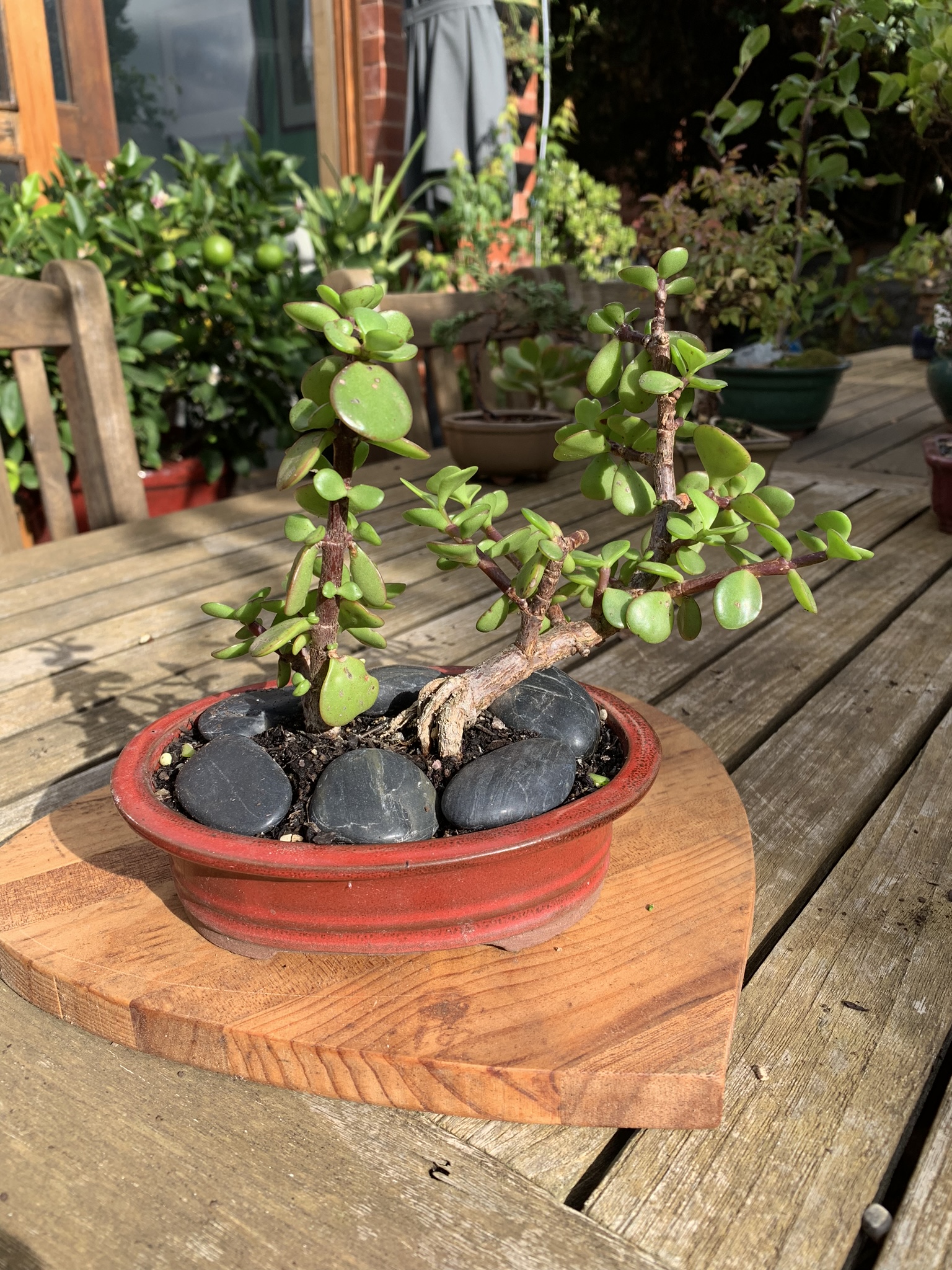
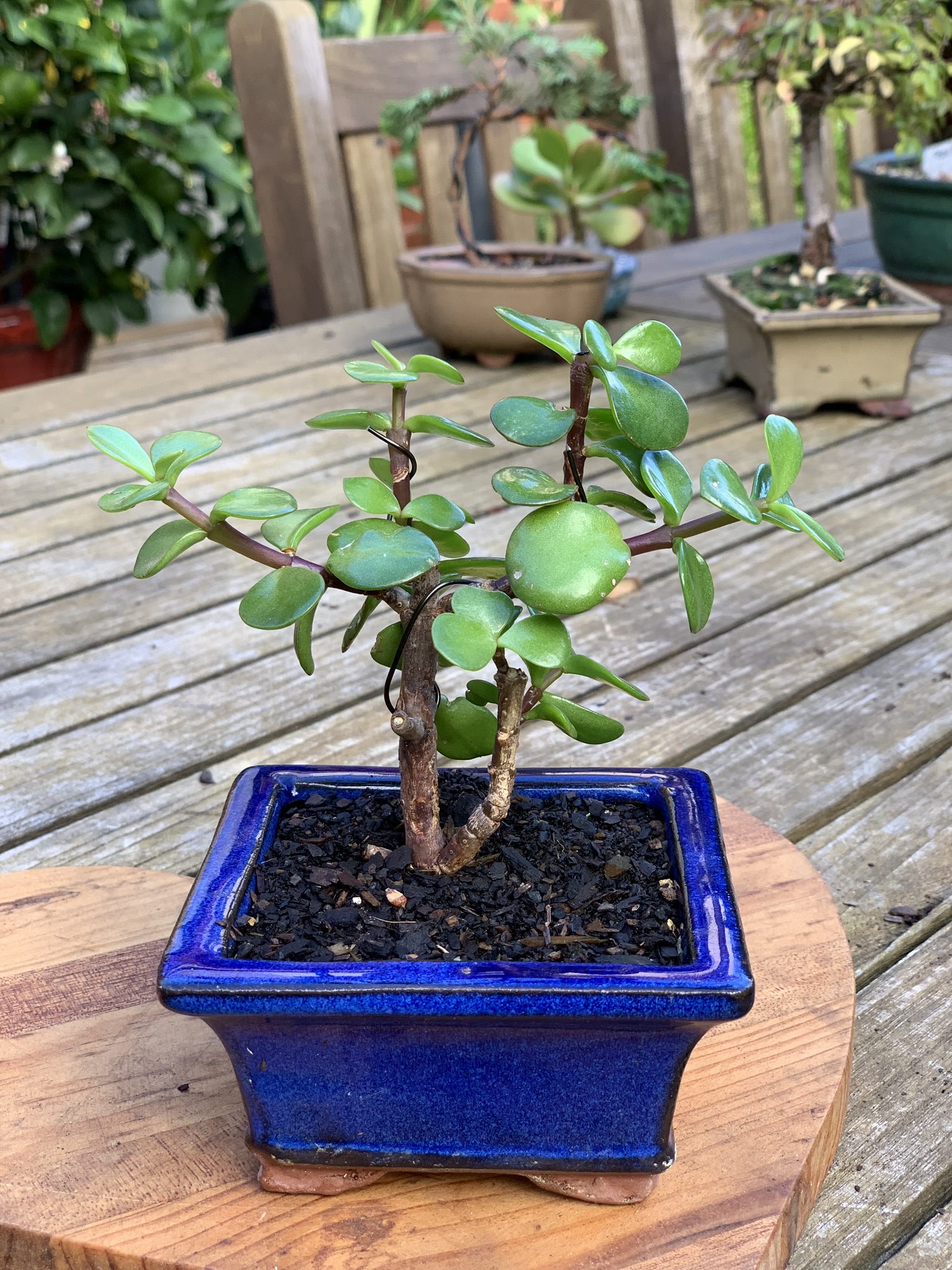
These are Jade succulents, native to South America (but found in many places around the world), Crassula Ovata commonly called a "Chinese Jade","Money Tree" or "Friendship Tree". This succulent bonsai tree provides a plant with unique trunk and leaf colourationwith tiny white flowers in season.
The plant is easy to look after, just keep it trimmed and lightly watered weekly. The foliage colours will vary from red to green depending on the level of watering and light given to the plant. to gain the best colours the plant needs strong light and limited watering with dry periods over summer to encourage flower development over winter.
If the plant becomes to big or odd shaped just trim and plant the cuttings to start a new Jade plant or use it to start a Bonsai. Keeping it trimmed will also aid branch development and more character. The Jade tree can be kept indoors in a very light position or outside in nearly any location.
.jpg)
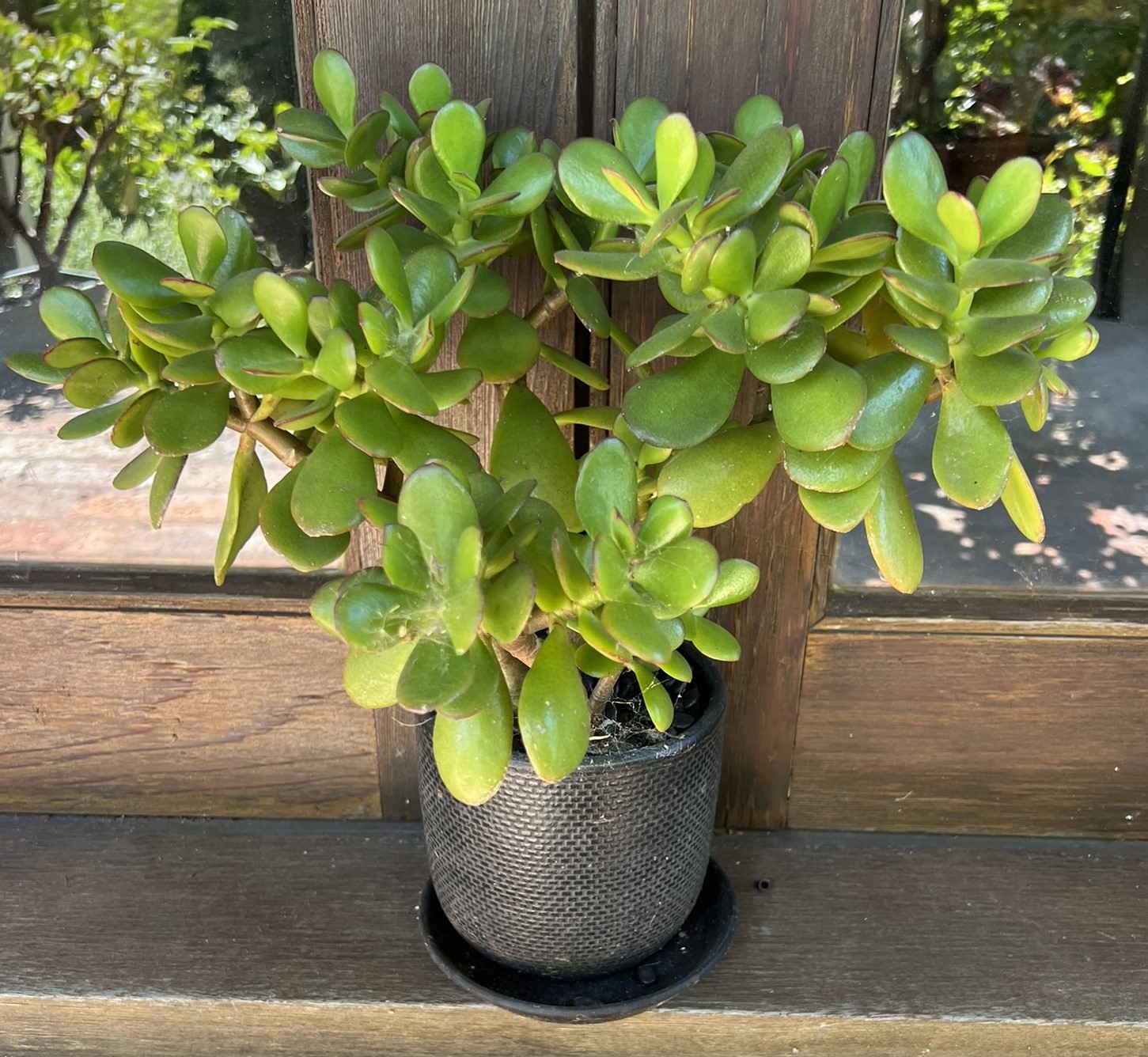
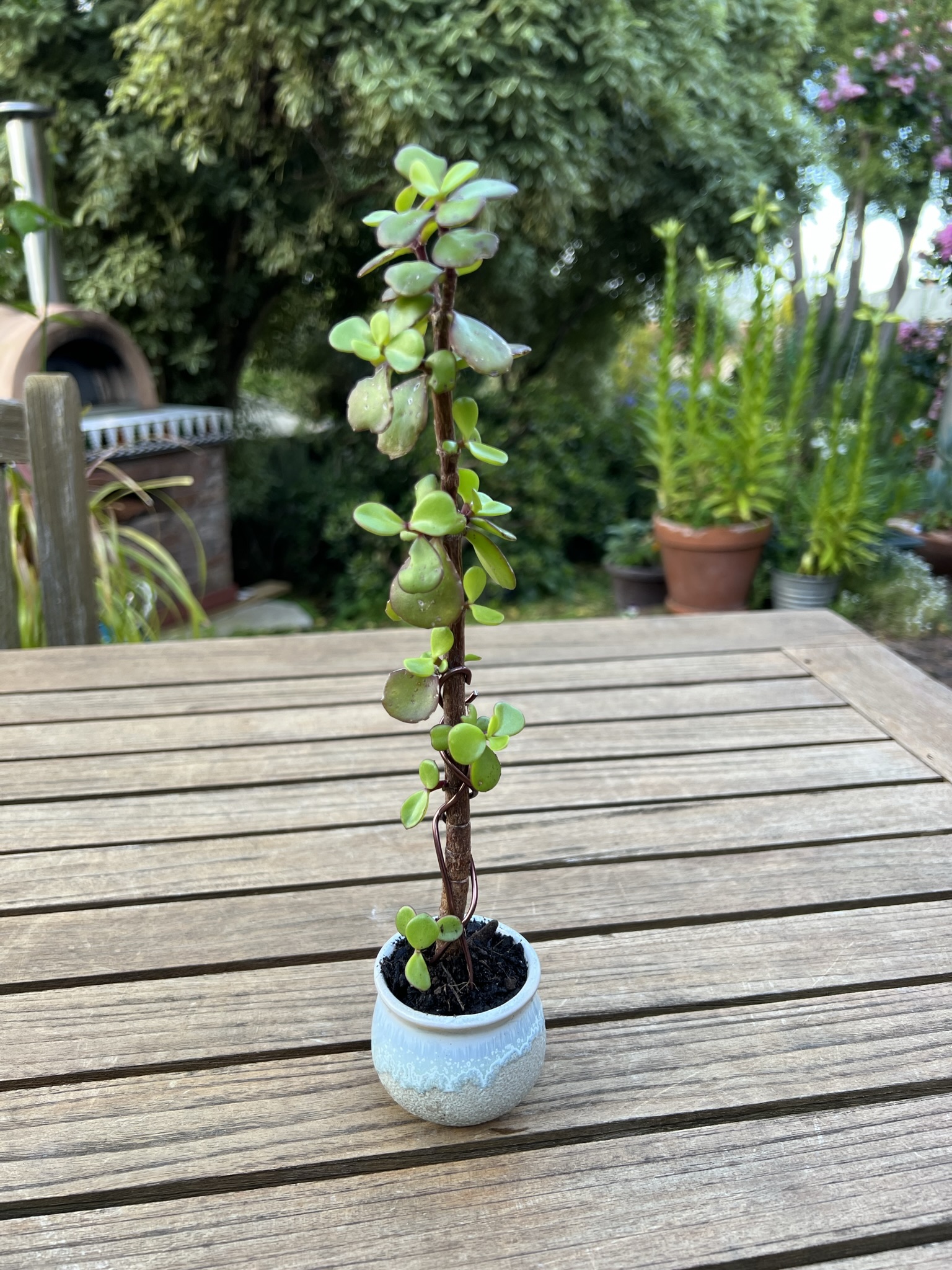
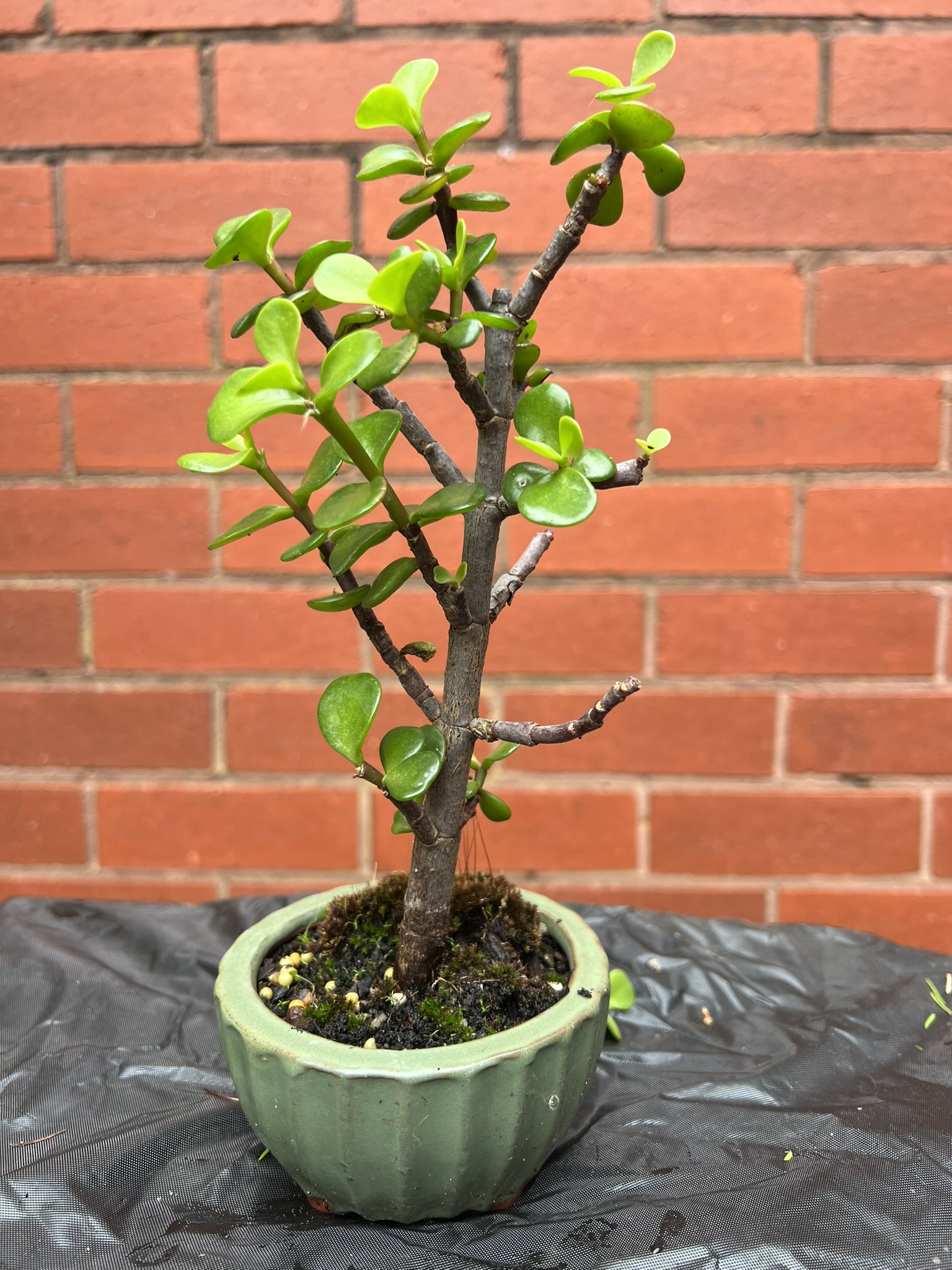
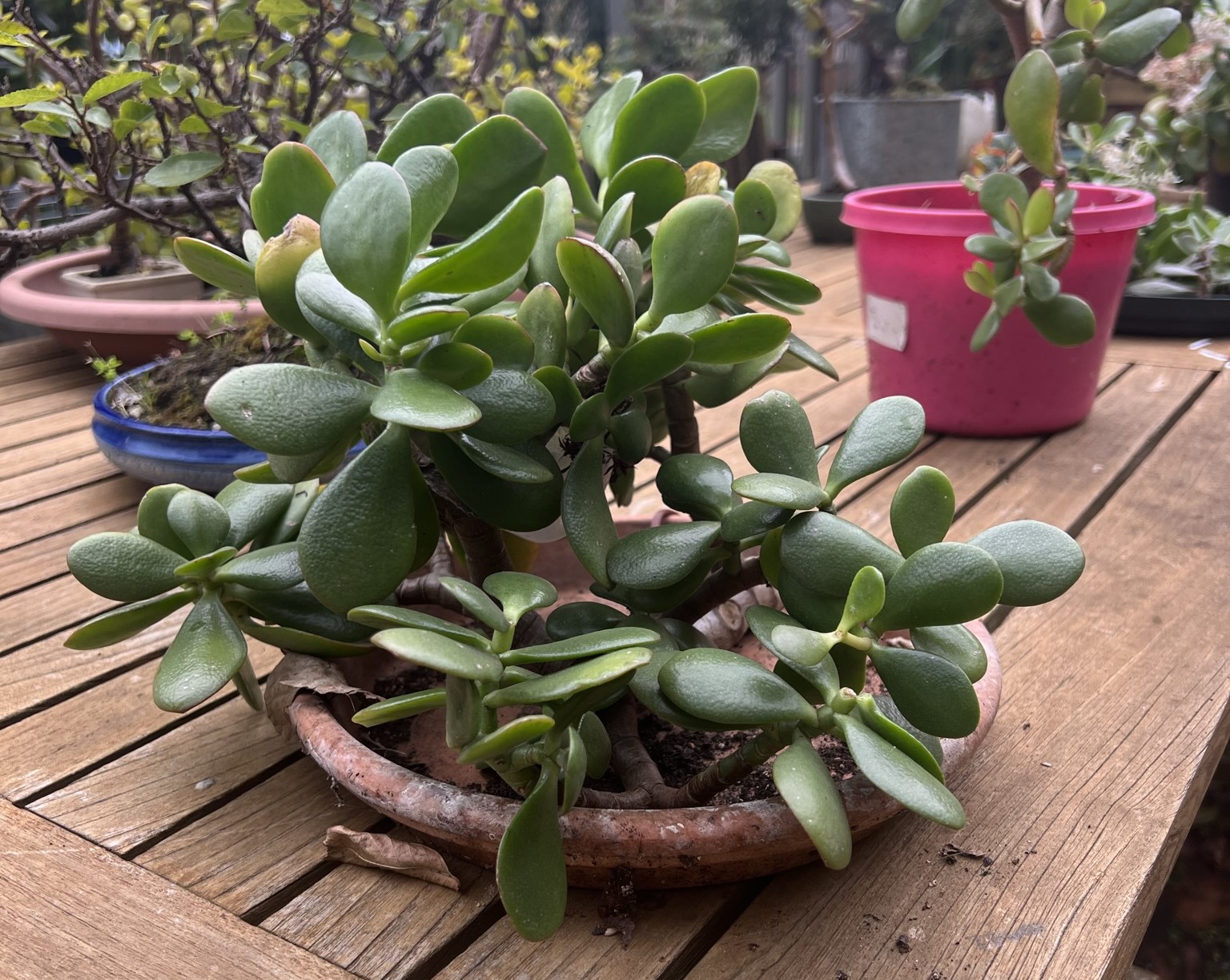
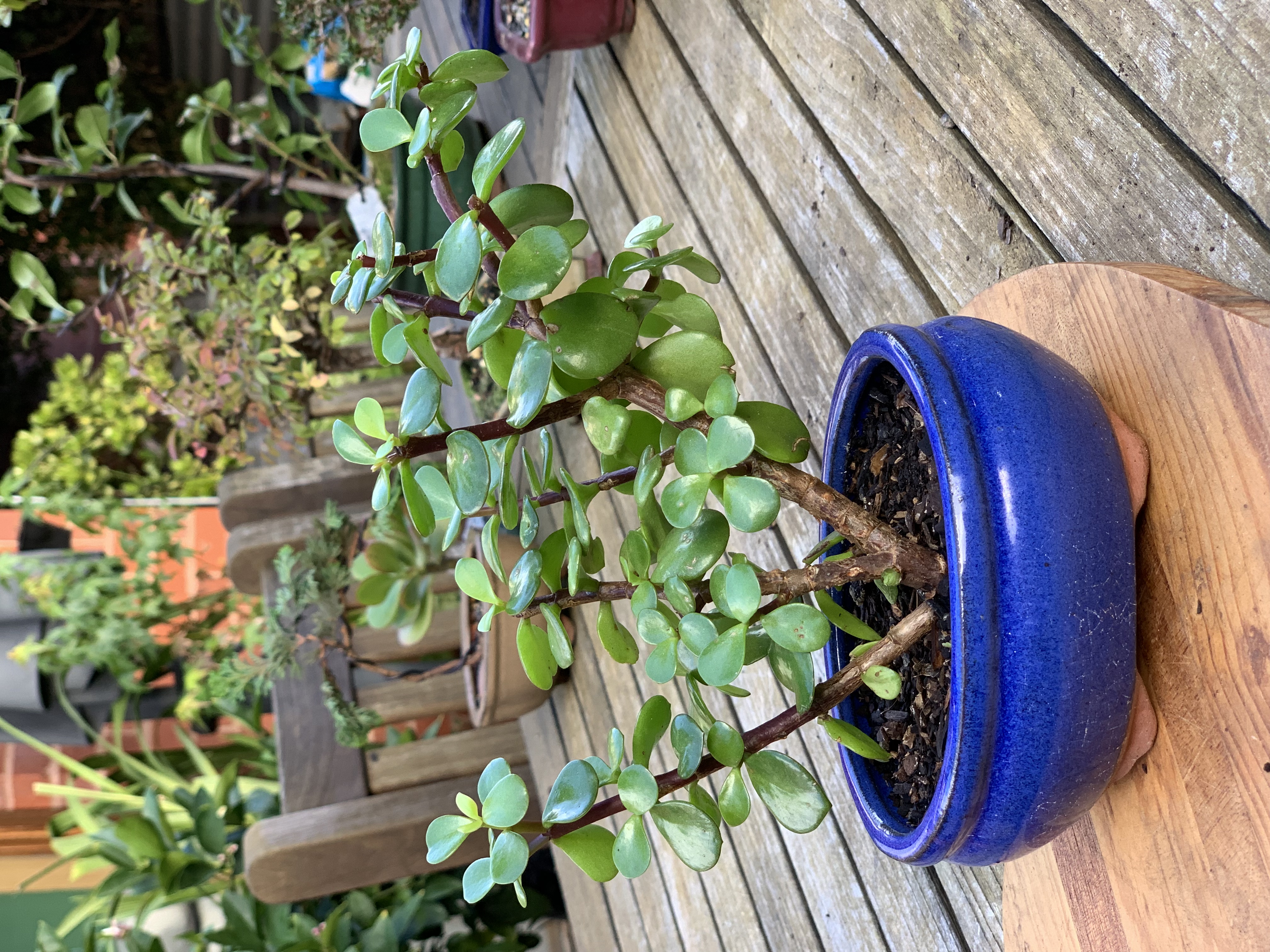
A dwarf jade succulent plant featuring small rounded fleshy leaf set directly on short dark mahogany stems native to South Africa. Know as a Dwarf Jade or Elephant Bush it is slow growing and perfect for use as a Bonsai. The rounded to oval leaves are connected directly to the reddish stems.
The small root ball adapts well to shallow bonsai containers, and being succulent tolerant of dry and hot conditions. It should be protected from very cold to freezing temperatures in the winter. Restrict watering in the winter to avoid root rot. As a Bonsai it benefits from regular pruning, can be shaped into many styles with regular pinching and trimming just above a pair of leaves.
Elephants do eat the plant, leaving the lower, spreading branches and a lot of broken twigs as they strip the branches of the leaves, which later root to expand and thicken the colony, creating new thickets known as “spekboomvelds”.
This is a popular type of Bonsai as it is very hardy and tolerant of a wide variety of conditions. The plant displays great colour contrast and textures and developed into very interesting shapes or styles.
Stem cuttings can be propagated easily with root within a month or so in nearly any type of potting medium in warm temperatures. Cuttings are best taken in spring or summer, allowing the cut portions to dry and callus for a couple of days before putting in the rooting medium.
If the plant becomes to big or odd shaped just trim and plant the cuttings to start a new Jade plant or use it to start a Bonsai. Keeping it trimmed will also aid branch development and more character. The Jade tree can be kept indoors in a very light position or outside in nearly any location.
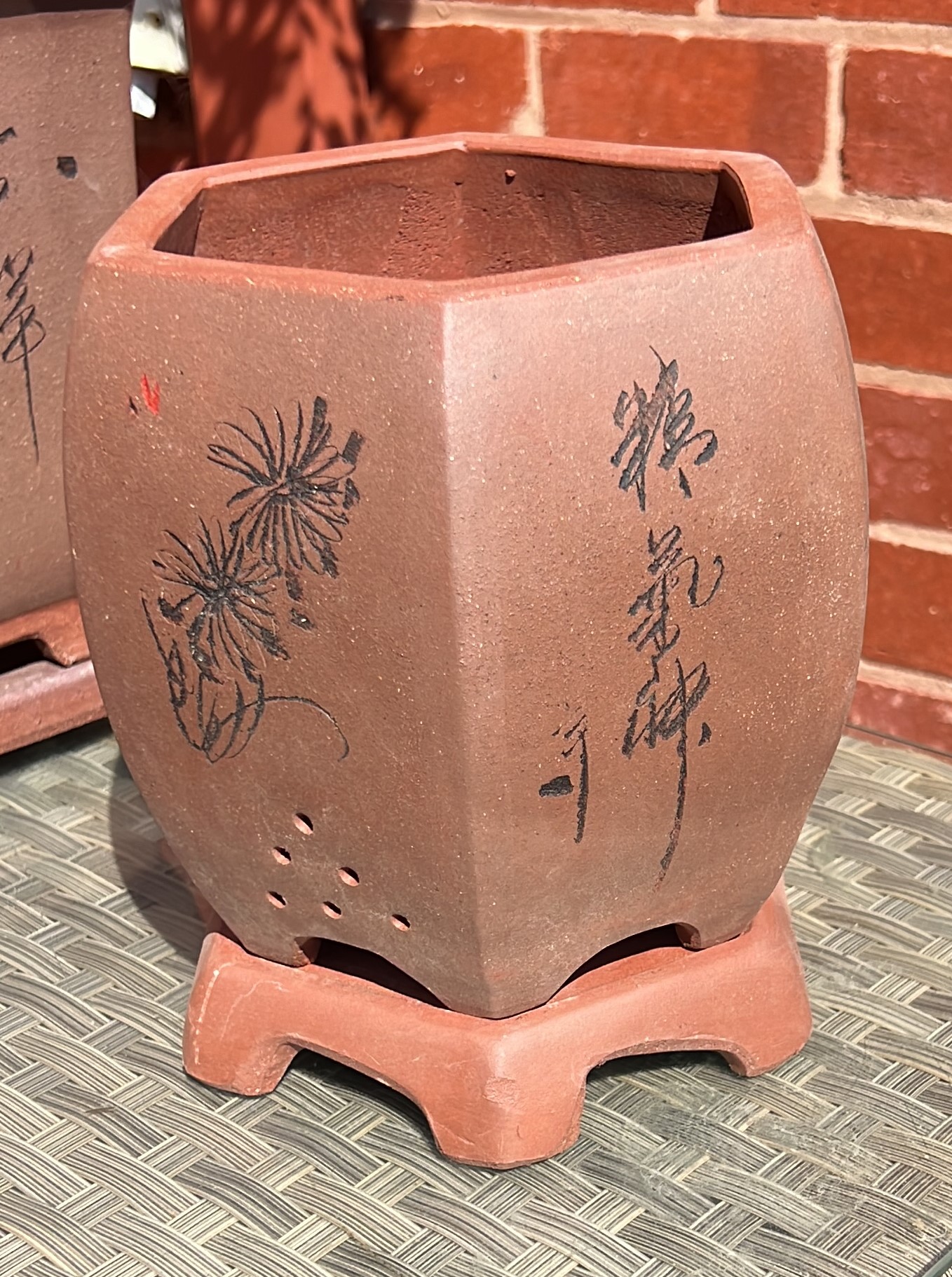
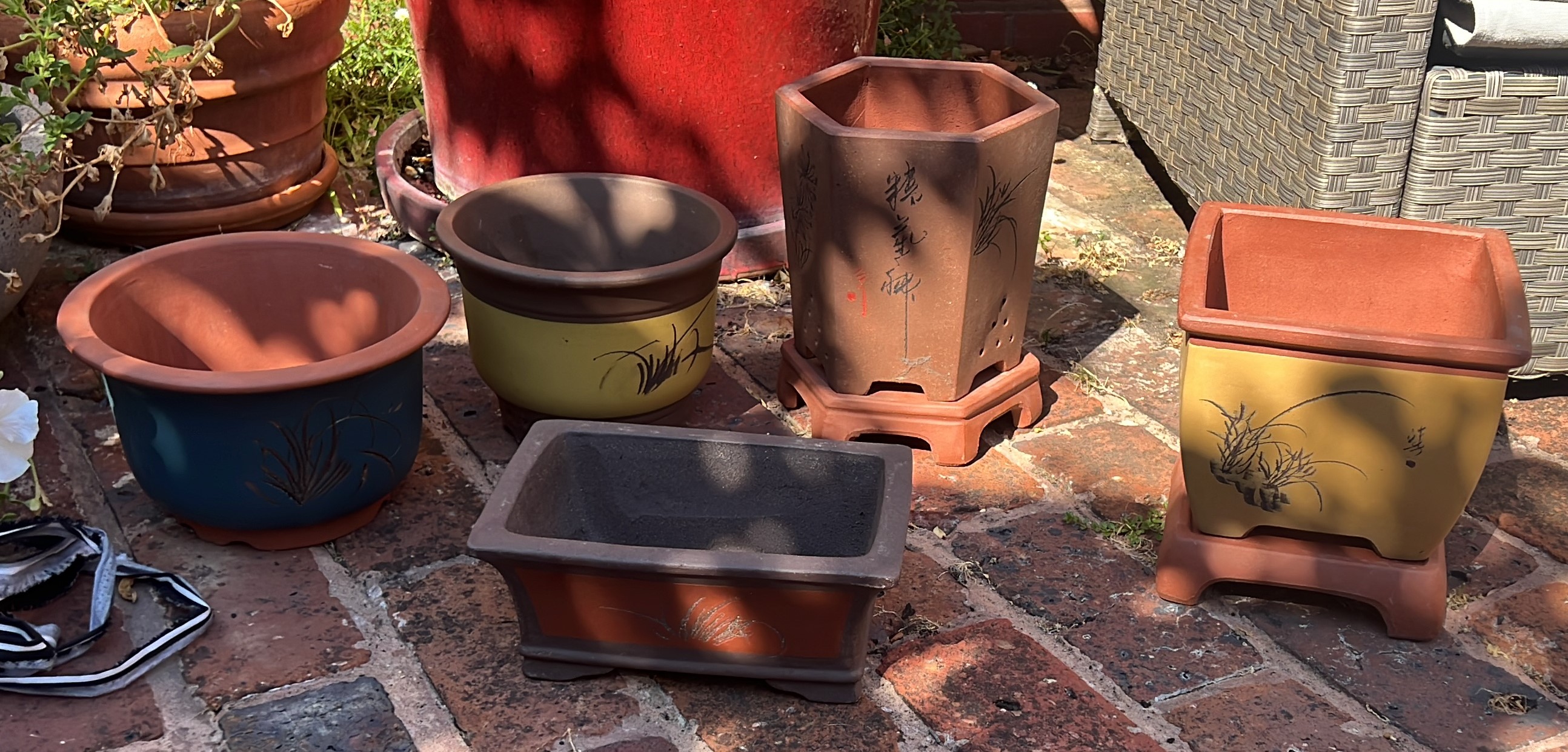
Barwon Bonsai sources pots from local potters and commercial suppliers, as well as imported pots from Japan and China.
Stock varies considerably due to the unique designs and handcafting so keep watch on the website for new arrivals.